
Raghib Name Meaning & Details
Origin, Popularity, Numerology Analysis & Name Meaning of Raghib
Discover the origin, meaning, and cultural significance of the name RAGHIB. Delve into its historical roots and explore the lasting impact it has had on communities and traditions.
Name
Raghib
Gender
Male
Origin
Muslim
Lucky Number
9
Meaning of the Name - Raghib
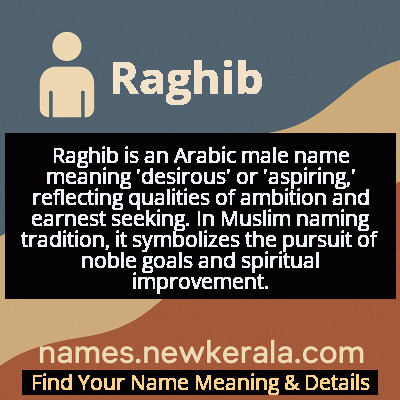
Raghib is an Arabic male name meaning 'desirous' or 'aspiring,' reflecting qualities of ambition and earnest seeking. In Muslim naming tradition, it symbolizes the pursuit of noble goals and spiritual improvement.
Raghib - Complete Numerology Analysis
Your Numerology Number
Based on Pythagorean Numerology System
Ruling Planet
Mars
Positive Nature
Generous, passionate, energetic, and humanitarian.
Negative Traits
Impulsive, impatient, moody, and can be overly emotional.
Lucky Colours
Red, maroon, scarlet.
Lucky Days
Tuesday.
Lucky Stones
Red coral, garnet.
Harmony Numbers
1, 2, 3, 6.
Best Suited Professions
Military, sports, philanthropy, leadership roles.
What People Like About You
Courage, energy, leadership, generosity.
Famous People Named Raghib
Raghib Bey
Military Commander
Ottoman military leader known for strategic reforms
Raghib Pasha
Statesman
Egyptian Prime Minister who implemented economic reforms
Raghib Isfahani
Scholar
Renowned Islamic scholar and author
Raghib Alama
Singer
Lebanese pop singer and television personality
Name Variations & International Equivalents
Click on blue names to explore their detailed meanings. Gray names with will be available soon.
Cultural & Historical Significance
In contemporary Muslim culture, Raghib remains a meaningful choice for parents who wish to instill values of ambition, determination, and purposeful living in their children. The name represents the balance between material aspirations and spiritual growth, reflecting the comprehensive nature of Islamic teachings that encourage believers to excel in all aspects of life. Its continued usage across generations demonstrates the enduring appeal of names that combine traditional roots with positive, aspirational meanings in Muslim naming practices.
Extended Personality Analysis
Individuals named Raghib typically exhibit strong goal-oriented behavior and persistent determination. Their namesake quality of being 'desirous' manifests as a natural drive to pursue their ambitions with focus and resilience. They are often perceived as self-motivated individuals who set high standards for themselves and work diligently to achieve their objectives. This aspirational nature is complemented by practical intelligence, making them effective at turning dreams into reality through systematic planning and execution.
In social contexts, Raghibs are usually confident and articulate, capable of inspiring others with their vision and enthusiasm. They tend to be natural leaders who approach challenges with optimism and creative problem-solving skills. While ambitious, they typically maintain strong ethical principles and are known for their integrity and reliability. Their desire for meaningful achievement extends beyond personal success to include contributing to their communities and supporting those around them. This combination of ambition, principle, and practical capability makes them respected figures in both professional and personal spheres.
Modern Usage & Popularity
In modern times, the name Raghib continues to be used consistently within Muslim communities worldwide, maintaining its traditional appeal while adapting to contemporary contexts. While not among the most popular names, it enjoys steady usage particularly in Arab countries, Pakistan, and among Muslim diaspora communities in Europe and North America. The name has seen some resurgence as part of the broader trend toward meaningful traditional names, with parents appreciating its positive connotations of aspiration and determination. In professional and social settings, individuals named Raghib often excel in fields requiring ambition and strategic thinking, such as business, technology, and leadership roles. The name's digital presence has grown through social media, where many Raghibs showcase their achievements and entrepreneurial ventures, further reinforcing the name's association with success and ambition.
Symbolic & Spiritual Meanings
Symbolically, Raghib represents the fundamental human drive for growth, achievement, and self-transcendence. It embodies the concept of purposeful aspiration that is central to both Islamic spirituality and human development psychology. The name symbolizes the journey from desire to fulfillment, emphasizing that authentic ambition, when guided by ethical principles, leads to meaningful accomplishments. In Islamic mystical tradition, 'raghbah' (desire) is considered a spiritual station where the seeker develops intense longing for divine connection, making the name particularly significant in contexts of spiritual aspiration.
Metaphorically, Raghib represents the bridge between potential and actualization, suggesting that earnest desire coupled with righteous action can transform dreams into reality. The name carries connotations of hope, determination, and the continuous pursuit of excellence across all aspects of life. It symbolizes the Islamic ideal of comprehensive improvement - seeking perfection in both worldly endeavors and spiritual growth, reflecting the balanced approach to life that Islamic teachings encourage.